Mental health: meaning, importance & hacks to improve it
Mental health has become one of the most discussed topics today—and for good reason. As life gets busier and more complex, taking care of our mental well-being is just as important as maintaining physical health. Whether it’s dealing with stress, battling anxiety, or simply trying to stay balanced, understanding the importance of mental health can make a huge difference in how we live.
This blog simplifies what mental health truly means, why awareness matters, and offers easy tips anyone can use daily.
What does mental health mean
Mental health refers to the emotional, psychological, and social aspects of our well-being. It affects how we think, feel, and behave. It influences how we handle stress, interact with others, make decisions, and cope with challenges.
Good mental health doesn’t mean you are always happy or problem-free. It simply means you can manage your emotions, maintain healthy relationships, and respond to life’s ups and downs in a balanced way.
It is shaped by multiple factors such as:
- Genetics
- Life experiences (trauma, stress, loss)
- Family or social environment
- Physical health
- Lifestyle and daily habits
Understanding mental health helps us build greater self-awareness and encourages better emotional control, resilience, and overall life satisfaction.
Mental health: why it is important to us
The importance of mental health cannot be overstated. It impacts nearly every area of life—from personal relationships to work performance and physical health.
Here’s why it’s matters:
- It improves your quality of life
- It enhances emotional resilience
- It affects physical health
- It shapes your relationships
- It boosts productivity and focus
A healthy mind improves creativity, decision-making, and performance at work or school.
Creating mental health awareness helps people recognize their emotions, seek support early, and break the stigma around mental challenges.
Common problems we face
Every person faces mental or emotional struggles at different points in life. Some of the most common challenges include:
Stress
Stress is a natural reaction to pressure or demand. Short-term stress can be helpful, but chronic stress drains emotional energy, affects sleep, and impacts the immune system.
Common causes: workload, financial worries, relationship issues, academic pressure, or social expectations.
Anxiety
Anxiety is more than just worrying. It can feel like constant fear, overthinking, restlessness, or a racing heart.
While occasional anxiety is normal, ongoing anxiety can interfere with daily life and decisions.
Depression
Depression is a serious mental health condition that goes beyond sadness. It involves a persistent feeling of emptiness, loss of energy, disinterest in activities, low self-esteem, and difficulty concentrating.
It can affect appetite, sleep, and daily functioning if left unmanaged.
These conditions are common, but with awareness, early care, and healthy habits, many people learn to manage them effectively.
Easy hacks to improve mental health
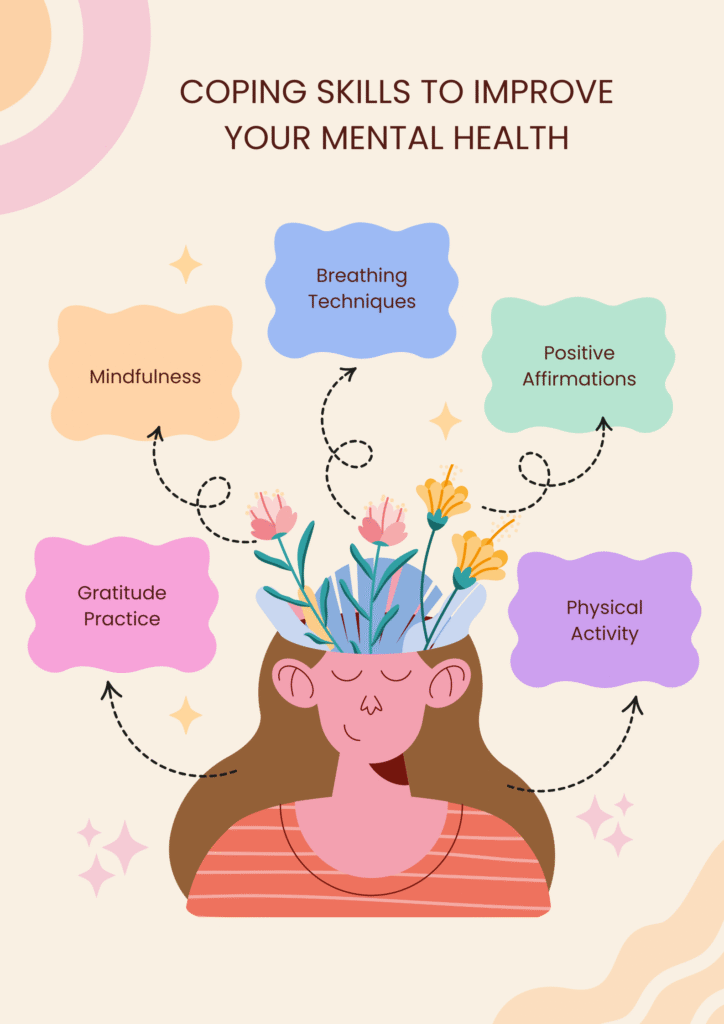
Improving mental well-being does not always require major lifestyle changes. Small, consistent habits can significantly enhance emotional balance, clarity, and resilience. The following strategies are professionally recognized for supporting mental health.
Practice Daily Gratitude
Daily gratitude helps reframe your mindset by shifting focus from stressors to positive elements of life. This habit enhances emotional regulation, reduces anxiety, and promotes overall happiness.
How to practice:
- Maintain a gratitude journal and list 3–5 things you’re thankful for each day
- Express appreciation to someone who has supported you
- Reflect on positive moments before going to bed
Cultivate Mindfulness
Mindfulness involves being fully present in the moment, without any judgment. It improves emotional awareness, reduces overthinking, and strengthens the mental clarity.
Ways to do mindfulness:
Practice mindful eating, walking, or breathing
Use guided mindfulness sessions or apps
Take short pauses during the day to observe your thoughts and surroundings
Use Breathing Techniques
Breathing exercises are effective in reducing stress, lowering anxiety, and promoting relaxation. They help regulate the nervous system and improve focus.
Recommended techniques:
Box breathing: Inhale–hold–exhale–hold for equal counts
4-7-8 breathing: Inhale for 4 seconds, hold for 7, exhale for 8
Diaphragmatic breathing: Deep belly breathing to calm the mind
Engage in Creative Activities
Creative engagement provides a therapeutic outlet for emotional expression and mental rejuvenation. It stimulates cognitive function and encourages positive mood regulation.
Examples of creative practices:
Singing or vocal training
Writing poetry or reflective journals
Playing a musical instrument
Drawing, painting, or other artistic activities
Participate in Physical Activity
Physical activity enhances mental health by releasing endorphins, improving sleep, and reducing symptoms of stress and depression. A consistent routine supports both physical and emotional resilience.
Activity which helps
Walking, jogging, or cycling
Strength training or stretching
Yoga for a blend of movement and mindfulness
Aerobic exercises or dance workouts
Mental health: when to seek professional support
While self-care practices are powerful, sometimes you may need extra help. Seeking professional support is a sign of strength, not weakness.
Consider reaching out to a psychologist, counselor, or therapist if you:
- Feel overwhelmed most days
- Experience persistent sadness or anxiety
- Notice changes in appetite, sleep, or energy levels
- Withdraw from social interactions
- Have difficulty performing daily tasks
- Feel hopeless or emotionally stuck
Early support prevents problems from worsening and promotes long-term healing and balance.
Conclusion
Mental health is a core part of living a healthy, meaningful life. By understanding the importance of mental health, spreading mental health awareness, and practicing small daily habits, anyone can improve their emotional balance and overall happiness. Remember, your mental well-being is not a luxury—it’s a necessity.